installation at Palazzo Mora | Venice Architecture Biennale 2025
CONCEPT & DESIGN
This installation was made in collaboration with Martin Bechthold, Maroula Zacharias, and Juan Pablo Ugarte Urzùa.
Material Sponsor: APE Grupo
The ceramic artifacts in the installation at Palazzo Mora recall the structures of cairns. Here they are composed of imitation marble and wood ceramic tiles.
Each one has a shape inspired by other forms taken from the local Venetian landscapes: the Lagoon and the Dolomiti.
The “Tor” recalls the free-standing rock formations or monoliths that remain after erosion. These are often sculpted into twisted forms. The blue color echoes the pools of water that sometimes form on rock surfaces.
The “Shard” references the cliffside rocks which break along cleavage points. The artificial grass is like the moss and grasses which, over time, grow in the cracks of the rock.
The “bricola” takes its inspiration from the markers along the edge of navigable waterways. The red color alludes to the signal buoys that float along the coast. The ceramic “timber” bricola is like petrified wood, its height recalls a tree trunk – a petrified tree trunk.
Ceramics is the first man-made material and, like stone and marble, it is subjected to pressure and heat in its creation. Just as stone, marble, and timber used in architecture are sourced through extractive processes, so is clay which is sourced from the ground.
The cairns are wayfinding markers but also symbols of precarious balance and impermanence. These inanimate “stone” objects are inspired by the “earth-beings”, the non-biological features of our planet, which are a part of the ecological balance in nature. These markers evoke the need to find a path towards a more harmonious “living together” of all beings on earth.
Materials: ceramic tile, artificial grass, plywood, paint
Height: 1,40 meters to 2,20 meters
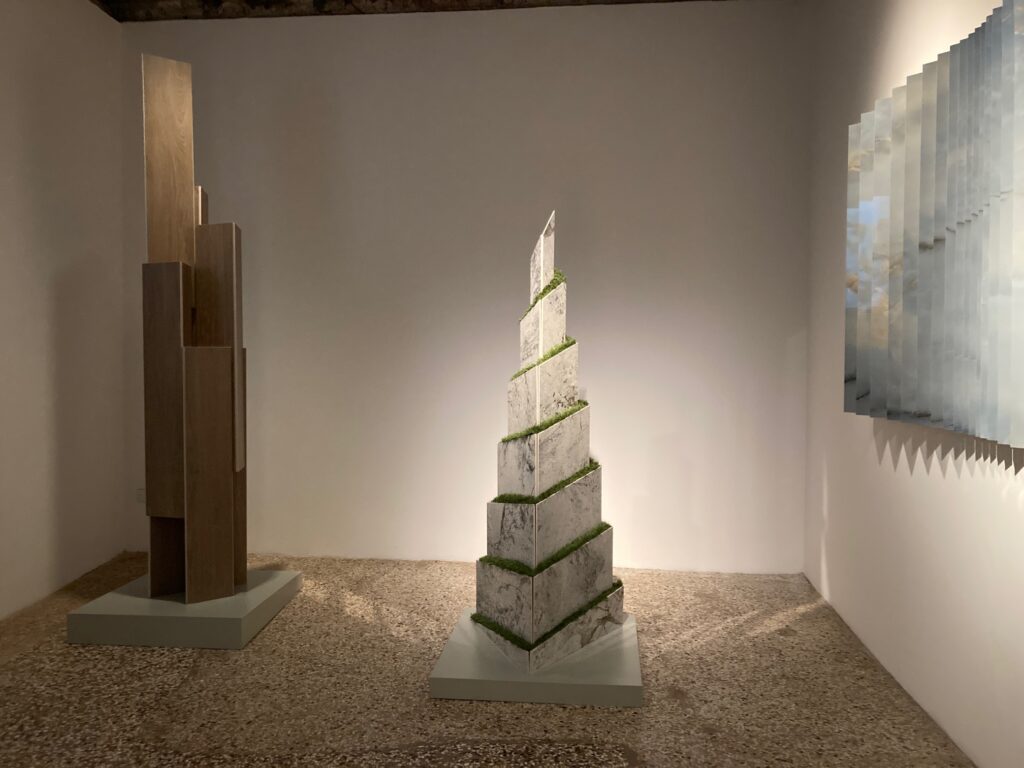
“Cairns” are markers on land – across cultures, across time, across languages. They mark pathways. They mark points of arrival, peaks of mountains and hills, places of burial and commemoration, places of ritual.
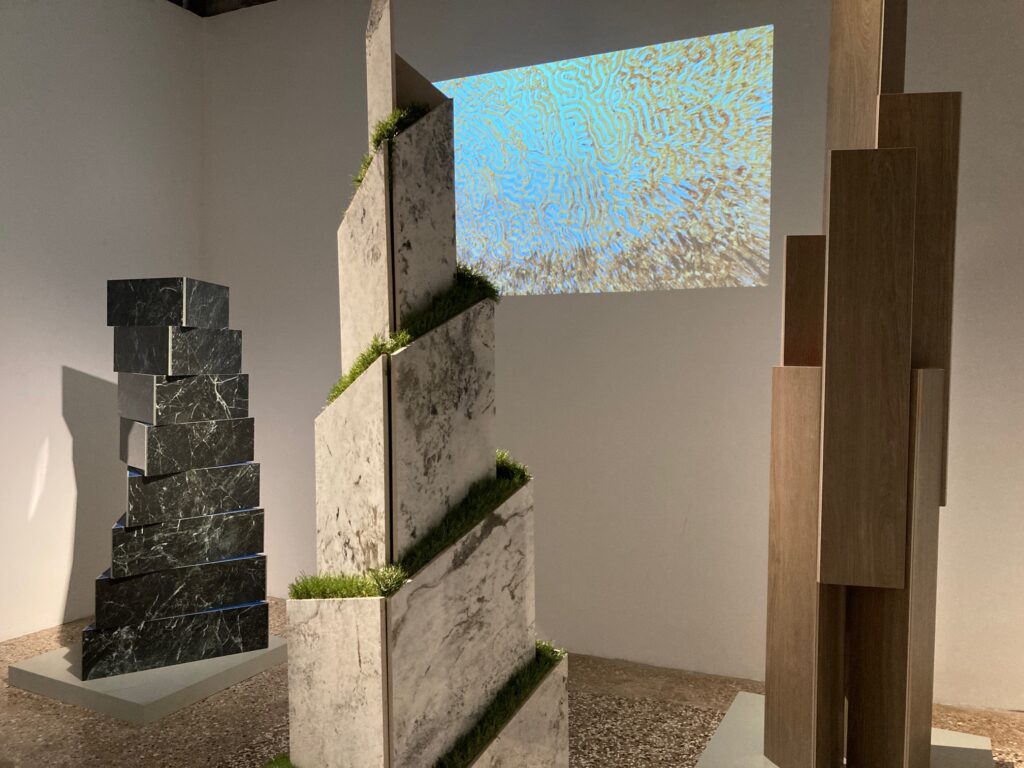
A “Tor” is the result of centuries of erosion. “Tors” mark the passage of time, of the incessant work of the natural elements. They mark vertical points in open landscapes.
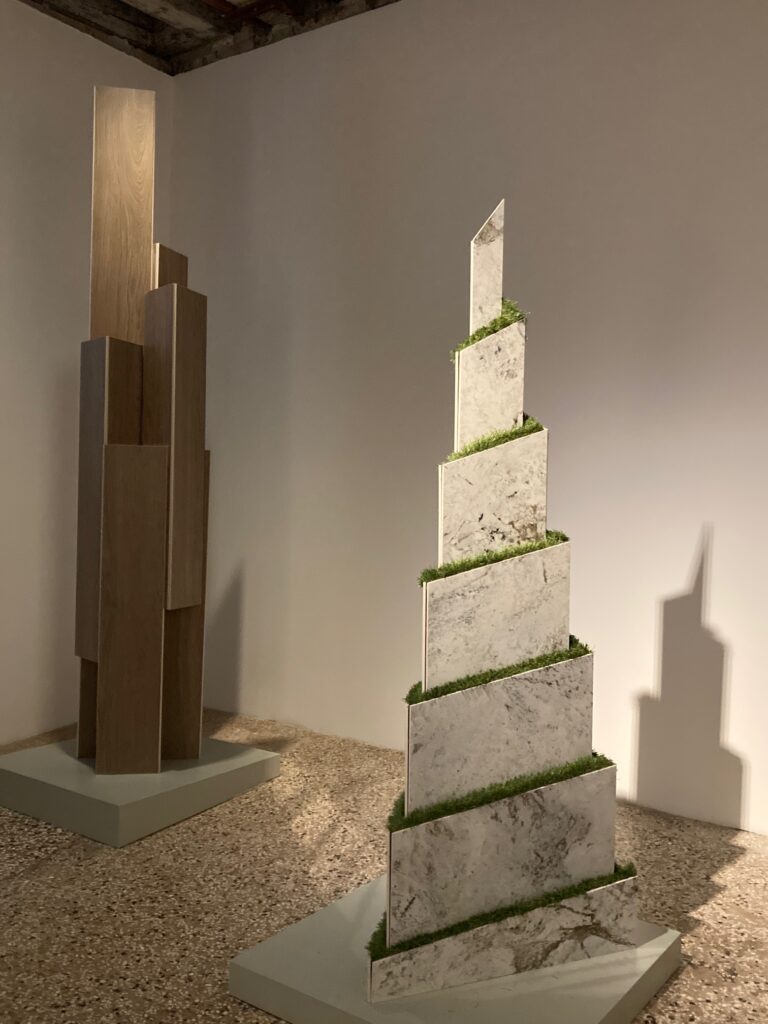
Cliffside rocks break down into “Shards”, break along cleavage points. Over time, moss grows on rock, softening its hardness.
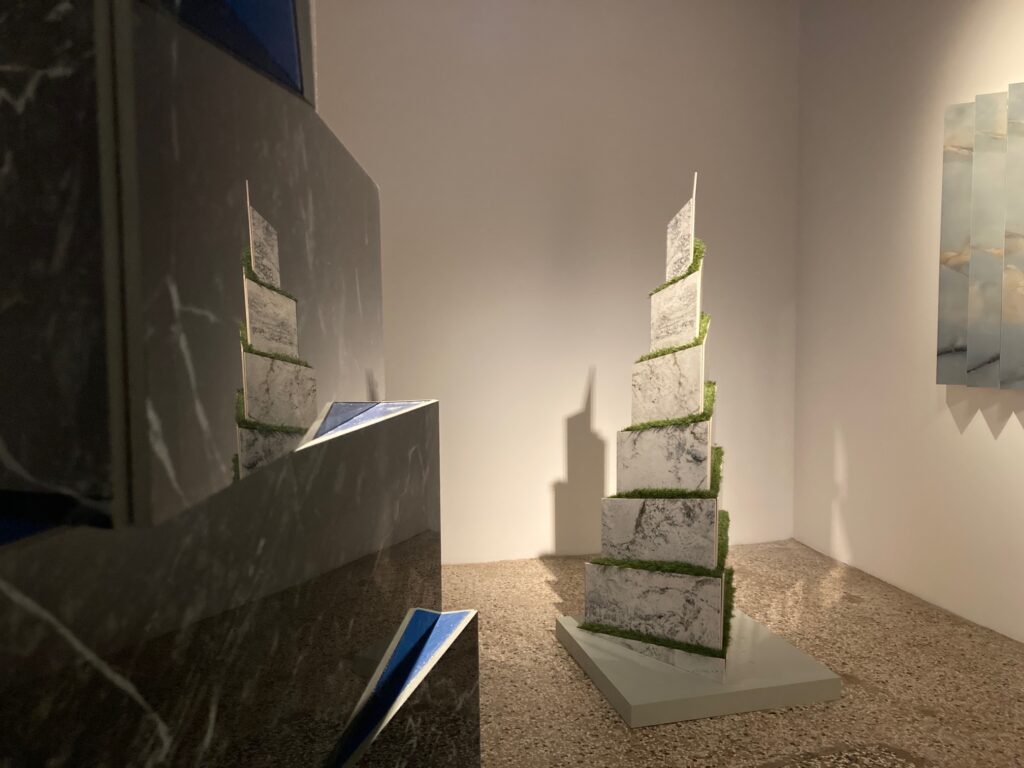
“Bricole” mark the edge of navigable waterways, mark pathways through water. They absorb salt from the water and the air, recording the passage of time.
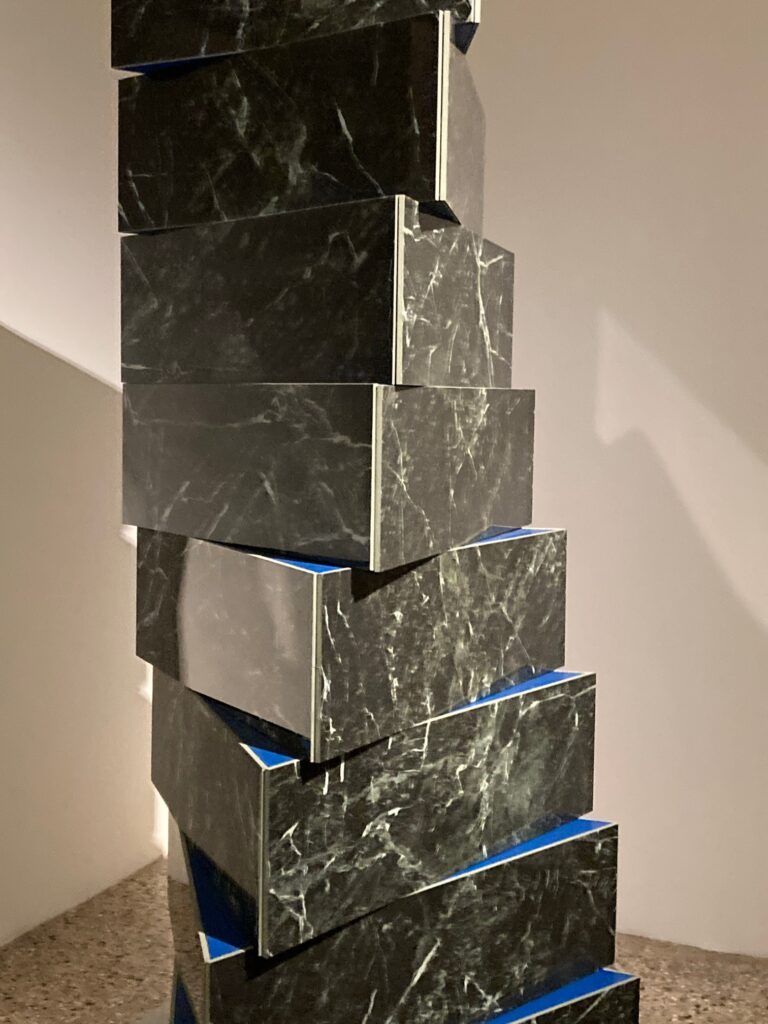
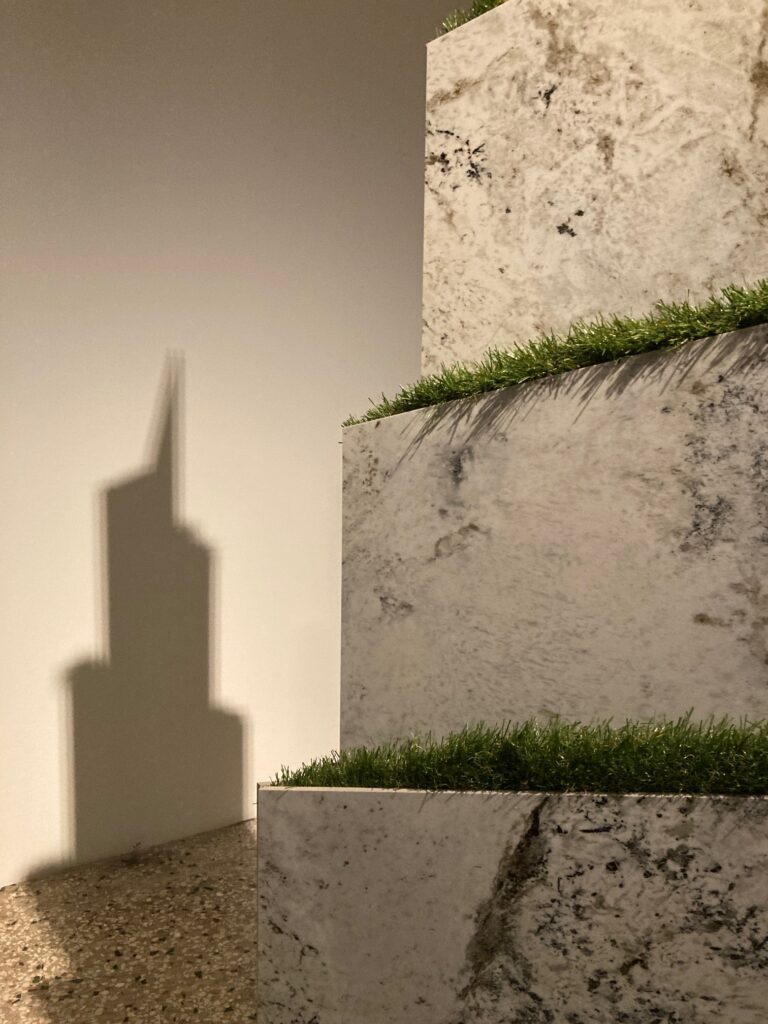
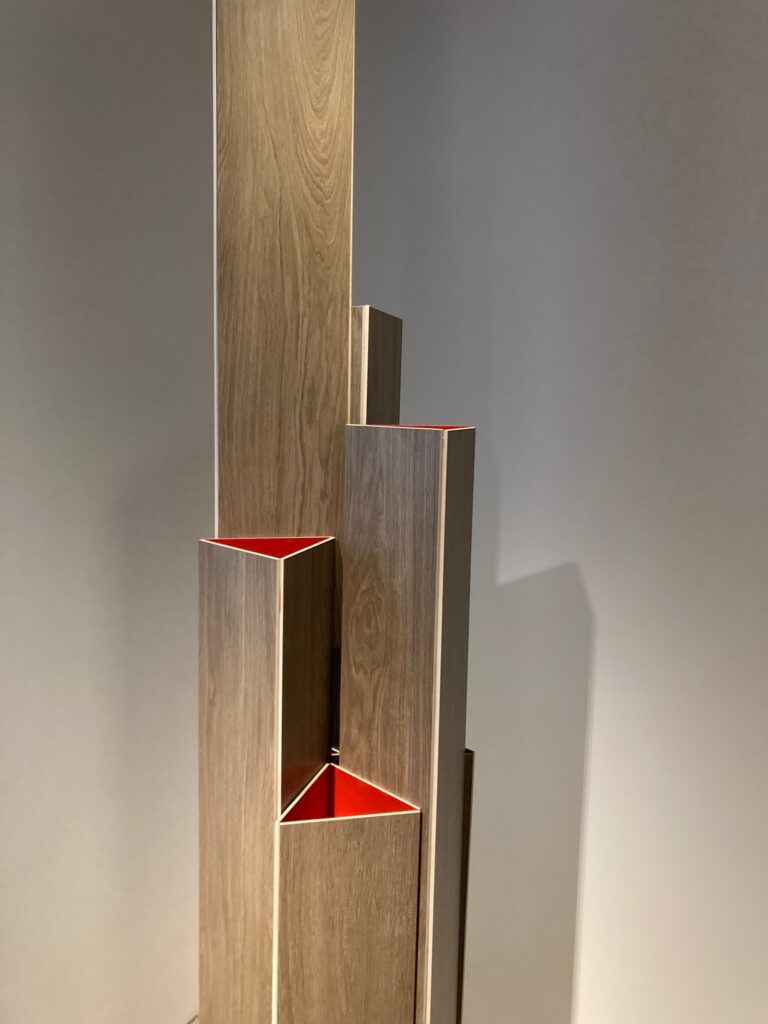
Cairn I: Tor . Cairn II: Shard . Cairn III: Bricola